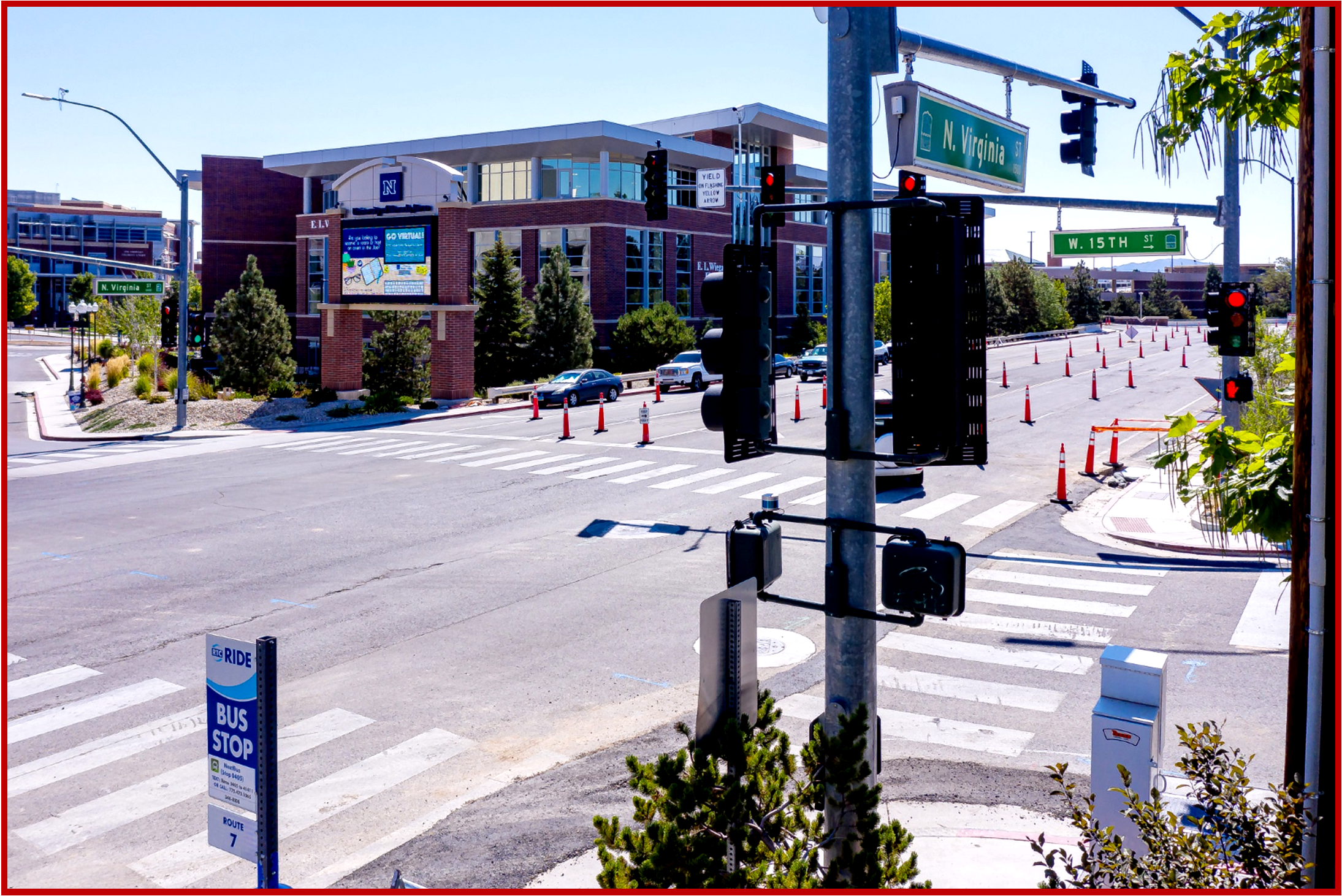
The University of Nevada, Reno’s Nevada Center for Applied Research has Velodyne Ultra Puck lidar sensors with traffic signals to detect, count and track pedestrians, cyclists and traffic.
Velodyne Lidar is working with the University of Nevada, Reno to advance research in transportation infrastructure. The Nevada Center for Applied Research purchased and, in conjunction with the Nevada DOT and Nevada Governor’s Office of Economic Development, is using Velodyne’s lidar sensors in its Intelligent Mobility initiative to collect data aimed at making transportation more efficient and safe.
The program has integrated Velodyne Ultra Puck lidar sensors with traffic signals to detect, count and track pedestrians, cyclists and traffic to help improve traffic analytics, congestion management and pedestrian safety.
One reason the lidar sensors have been placed at crossing signs and intersections is because lidar used today does not allow for facial recognition. In theory smart by anonymous city applications can preserve trust among the public. However, the US is far from even thinking about privacy, let alone articulating a policy about private data use as evidenced by Google and Twitter and Facebook among many other rich and powerful corporations that own politicians.
Continue reading →


CARB Fines Flagship, a Ford Specialty Vehicle Maker
The California Air Resources Board has reached a settlement of $250,000 with Flagship Inc. to resolve clean air violations related to the sale of modified Ford vehicles in California. Flagship in Elkhart, Indiana is a Ford Authorized Specialty Vehicle Manufacturer.
CARB said that Flagship advertised, sold, and offered for sale, 2016-2017 model year Ford-150 vehicles that were modified with enhanced configuration accessories and aftermarket superchargers, prior to sale to the consumer. This was the result of regular field inspections at dealerships, and further investigations.
Continue reading →