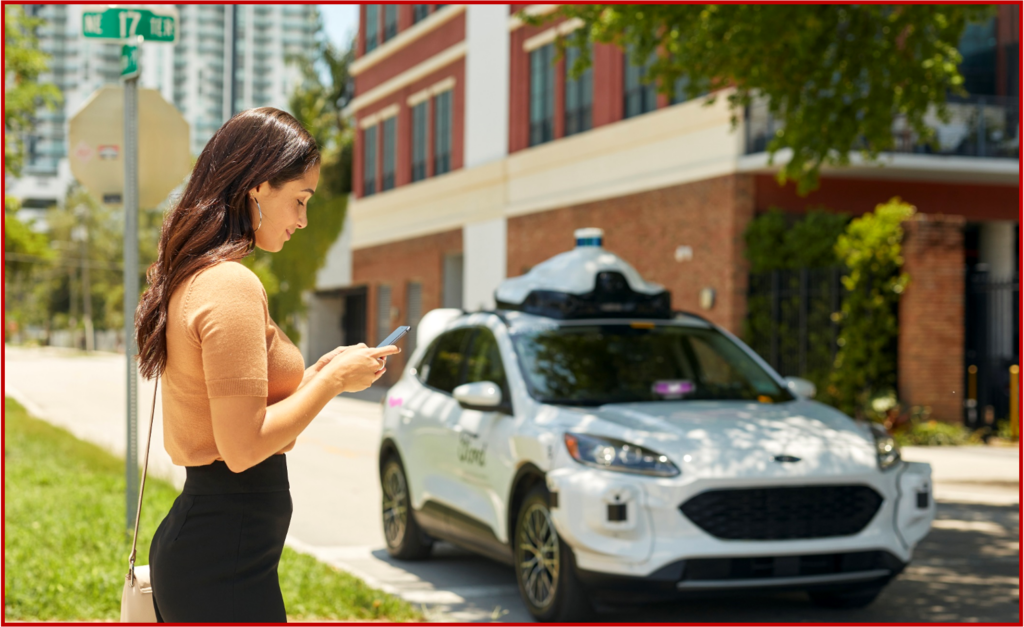
 Argo AI, Lyft and Ford Motor Company said today are working together to commercialize autonomous ride hailing at scale. The collaboration in theory provides all of the ingredients necessary to create a viable autonomous ride hailing service. These include self-driving technology, a vehicle fleet and transportation network needed to support what’s hoped to be a growing business and satisfied riders. (Lyft and Motional to Deploy Fully Self-Driving Vehicles in 2023, Volkswagen, Argo AI to Start Autonomous Driving Tests, Milestones: Volkswagen Completes Promised Argo AI Funding, Ford and Austin Launch Mobility Challenge Program, Ford Smart Mobility, Zotye Ink MOU on Chinese Ride Hailing)
Argo AI and Ford will deploy Ford self-driving cars, with safety drivers, on the Lyft network, as part of a network access agreement, with passenger rides beginning in Miami later this year and in Austin starting in 2022. As vehicles are positioned, Lyft users within the defined service areas will be able to select a Ford self-driving vehicle to hail a ride. “This initial deployment phase will lay the groundwork for scaling operations, as the parties are now working to finalize agreements aiming to deploy at least 1,000 autonomous vehicles on the Lyft network, across multiple markets over the next five years,” the companies claimed.
To support self-driving vehicle deployments at scale, Ford has established a presence in Miami, Austin and Washington, D.C. This includes operations to support commercial fleets, including fueling, servicing and cleaning. Ford says it also has established community relationships, including “working closely with city leaders to provide valuable mobility solutions to meet their unique needs.”
The collaboration is designed to scale autonomous vehicle deployment using market and safety data that helps define where self-driving technology can safely serve consumers. As part of the agreement, Argo will use anonymized service and fleet data from Lyft to overcome the challenges faced by other autonomous vehicle companies by focusing on where they can build a sustainable business and validate deployment through localized safety data. In addition, Lyft will receive 2.5% of the common equity of Argo AI as part of the licensing and data access agreements to collaborate on the safe commercialization of autonomous vehicles.
“Argo and Ford are currently piloting, mapping and preparing for commercial operations of autonomous vehicles in more cities than any other AV collaboration, and this new agreement is a crucial step toward full commercial operations – the addition of Lyft’s world-class transportation network,” said Scott Griffith, CEO, Ford Autonomous Vehicles & Mobility Businesses. “These three companies share a belief that autonomous vehicles will be a key enabler for a cleaner, safer and more efficient urban mobility landscape. This is the beginning of an important relationship between three dynamic companies ultimately aiming to deliver a trusted, high-quality experience for riders in a multi-city large scale operation over time.”
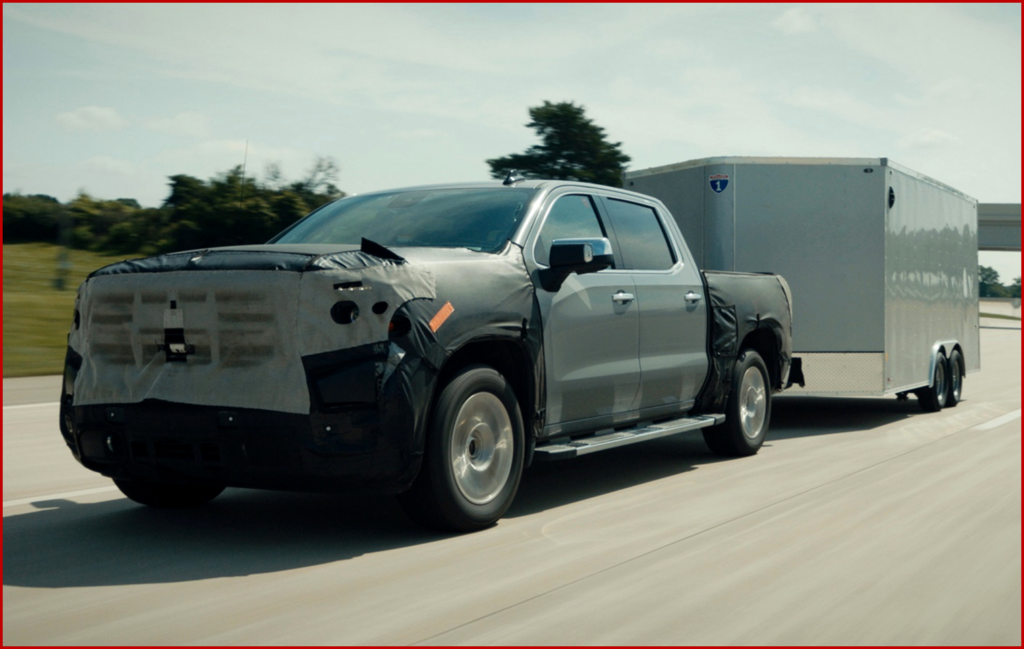 General Motors said today it will introduce new Super Cruise1 capabilities on six model year 2022 vehicles during Q1 of 2022. Super Cruise claims to be the industry’s first true hands-free driver-assistance technology allowing drivers to travel hands-free on over 200,000 miles of compatible roads across the U.S. and Canada.



NHTSA – Urgent Fire Recall Again on 2017-2019 Chevrolet Bolts
A Chevrolet Bolt EV is loaded onto its display stand Tuesday 15 November 2016 in preparation for Automobility LA – the press and trade days preceding the Los Angeles Auto Show in California.
NHTSA says that owners of 2017-2019 Chevrolet Bolt vehicles should park their cars outside and away from homes until their vehicles have been repaired, due to a new recall for the risk of fire. This alert applies to all affected vehicles, even if the owner has had the previous recall repairs completed.
GM has issued a new recall affecting the 50,932 Model Year 2017-2019 Chevrolet Bolt vehicles covered under the original recall announced in November 2020 and revised in May 2021. NHTSA is aware of one fire with the interim remedy and two fires with the final remedy. Due to the risk of fire, vehicle owners should continue to park these vehicles outside, away from structures, and not charge them overnight. Continue reading →