
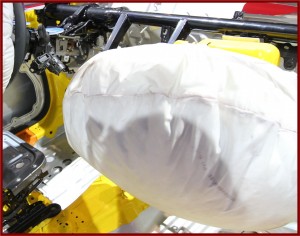
Mazda North American Operations today issued an urgent “Do Not Drive” warning about its vehicles equipped with non-desiccated Takata air bags that were recalled, buts still are unrepaired. NHTSA made the documents public. Mazda apparently did not bother to alert media outlets about this life threatening safety defect. Ford Motor to its credit did. (Read AutoInformed on More Takata Flack – Ford Issues Do-Not-Drive Advisory )
“If you have one of these vehicles, do not drive it until the repair is completed and the defective air bag is replaced,” The National Highway Traffic safety administration said in a relatively rare Consumer Alert. To date, NHTSA has confirmed 27 people in the U.S. have been killed by defective Takata air bags that exploded. In addition, at least 400 people in the U.S. reportedly have been injured by exploding Takata air bag inflators. “Even minor crashes can result in exploding Takata air bags that can kill or produce life-altering, gruesome injuries. Older model year vehicles put their occupants at higher risk, as the age of the air bag is one of the contributing factors,” NHTSA said. Continue reading








IIHS On Intelligent Speed Assistance
Click for more.
There’s nothing like hands on the wheel experience in AutoInformed’s view. A new post from Insurance Institute for Highway Safety caught our attention. What follows is courtesy of an copyrighted by IIHS – all rights reserved.
“The first time I got behind the wheel of a loaner SUV kitted out with an aftermarket anti-speeding device this spring, I was nervous. As a safety researcher at IIHS, I’ve studied the benefits of intelligent speed assistance (ISA), which can detect the speed limit and restrict the power output of your engine to keep you from exceeding it, said I’ve more or less argued it should be required in all new vehicles to help stem a speeding epidemic that kills thousands of Americans every year. But I’d never driven with it before and secretly worried I might hate it. Was I about to put myself in an awkward position?” said Ian Reagan, a Senior Research Scientist, IIHS. Continue reading →