
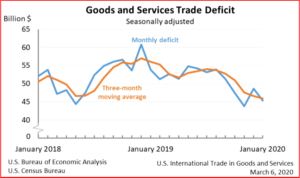
Click to Enlarge.
The US international trade deficit in goods and services may have decreased to $45.3 billion in January from $48.6 billion in December (revised), as imports decreased more than exports. However, the Census Bureau does not have sufficient statistical evidence to conclude that the actual change is different from zero.
The drop in imports portends shortages, which could harm both consumer and business spending. The coronavirus epidemic has upset businesses and production in China, with an extension of the Lunar Year holidays cutting output in an effort by the Chinese government to constrain its spread. This likely will be repeated in the US economy as the epidemic spreads here. It’s too soon to see the potential negative effects on the auto industry, but disruptions are likely given China, South Korea and Mexican trade in automotive goods.
Continue reading









Tire Wear Emissions 1000 Times More Than Exhaust Emissions
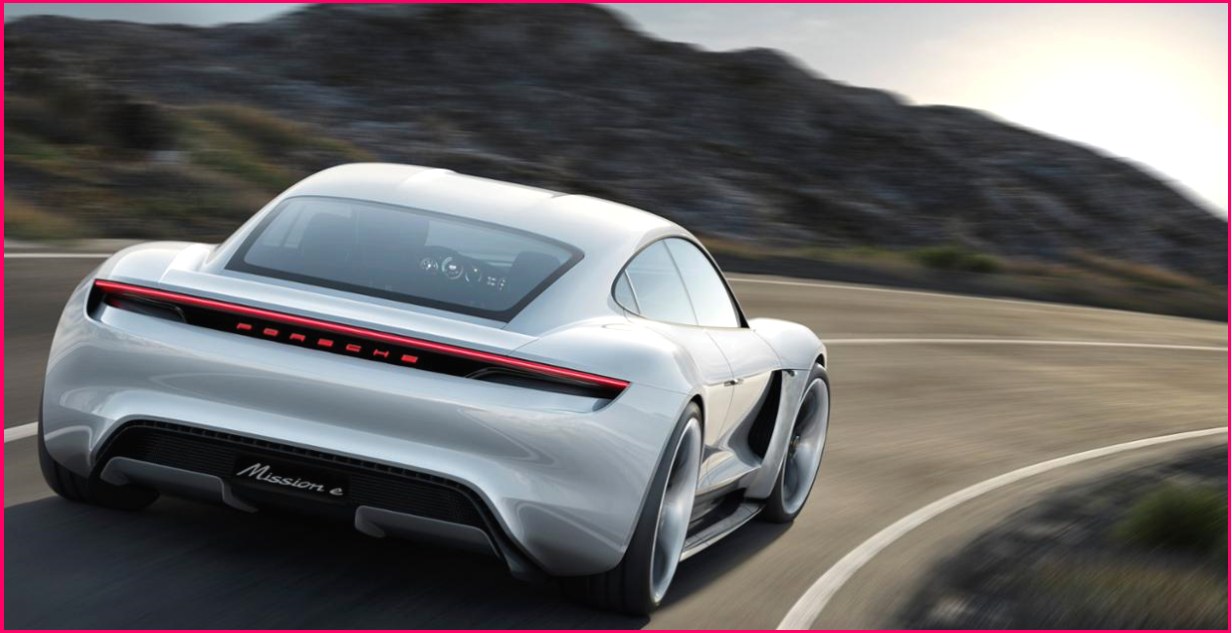
Pollution from tire wear can be 1,000 times worse than what comes out of a car’s exhaust, European consultancy Emissions Analytics has found. Regulation of exhaust emissions by the EU results in new cars that emit little particle pollution. However, unregulated tire wear pollution can be 1,000 times worse, finds independent real-world testing experts at Emissions Analytics. It says that the increased popularity of SUVs, larger and heavier than standard vehicles, exacerbates this problem – as does growing sales of heavy EVs and widespread use of budget tires.
Non-exhaust emissions (NEE) are particles released into the air from brake wear, tire wear, road surface wear and re-suspension of road dust during vehicle operation. No legislation is in place to limit or reduce NEE, but they affect air quality.
Continue reading →