

Click for more.
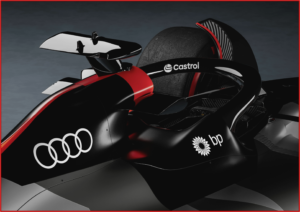
Audi said today in Germany that as part of its takeover of all shares in Sauber Holding AG and a realignment of future management of the Audi factory Formula One team that Mattia Binotto is joining the Audi F1 project* and will take on its leadership in Hinwil Switzerland. Oliver Hoffmann and Andreas Seidl are leaving the project.
“I am delighted that we have been able to recruit Mattia Binotto for our ambitious Formula 1 project,“ said Gernot Döllner, CEO, AUDI AG. “With his extensive experience of more than 25 years in Formula 1, he will undoubtedly be able to make a decisive contribution for Audi.“ Following his university degree in mechanical engineering at EPFL in Switzerland, the Italian immediately joined the F1 test team of Ferrari in 1995. He subsequently had various positions, from chief engineer to manager of the engine department and technical director. In 2019 he was additionally appointed as team head of Scuderia Ferrari.” Continue reading




Fleet Owners with EVs and Traditional Vehicles Favor EVs
Click to enlarge.
The latest research from Cox Automotive published today – Future of Fleets: Path to EV Adoption – shows that among other things that, compared to vehicles powered by internal-combustion engines (ICE), fleet owners operating both electric vehicles (EVs) and their traditional, fuel-burning counterparts have higher levels of satisfaction with their EVs. This despite higher acquisition costs as well as more frequent service and maintenance. Conducted in Q1 2024, the survey collected data from fleet decision-makers in various regions and across differing fleet sizes. “Data show that 14% of fleets presently operate EVs, with a significant trend toward EV adoption expected in the next five years,” Cox said.
“The electric-vehicle story is much larger than just the retail story,” said Zo Rahim, senior analyst of Research and Market Intelligence at Cox Automotive. “In many ways, electric vehicles can be an ideal solution for many fleet operations, which often have set routes of known distances, vehicles that routinely overnight in the same location, and operations that prioritize the cost of ownership. The fleet business is significant in the U.S. market, and we expect the EV share of the fleet market to expand in the coming years.” Continue reading →