
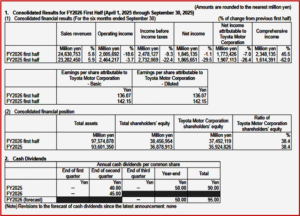
Click to enlarge.
Today, Toyota Motor Corporation (NYSE: TM, 7203T) posted FY 2026 Q2 [1 April 2025 through 30 September 2025- AutoCrat] results that showed total consolidated vehicle unit sales increased globally by 227,000,+ 5.0% to 4,783,000. However, net income attributable to Toyota Motor Corporation was 1,773.4 billion yen, a decrease of 133.6 billion yen or -7.0% compared with FY2025 first half. Nonetheless, Toyota increased its fiscal-year profit forecast. Toyota maintains that its products and sales outside the United States would counter the negative effects of of U.S. President Donald Trump’s import tariffs. The world’s largest automaker forecasts an operating profit of 3.4 trillion yen (~$22.6 billion) for the financial year ending March 26, a jump of +6% from the 3.2 trillion yen it formerly forecast.
“North America is facing a very tough situation due to the impact of tariffs,” said Chief Financial Officer Kenta Kon during the financial results press conference. “While conditions were not easy in other markets such as China, Europe, Asia and Africa, both profitability and sales volume remained solid,” Kon said. Continue reading




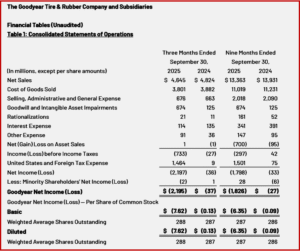


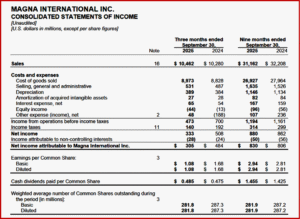


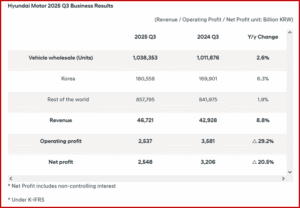


Michigan – Tariffs Cause Higher Grocery Prices, More Expensive Housing, Put Jobs at Risk
Click for more.
In response to Governor Gretchen Whitmer’s executive directive to gauge the impact of federal tariffs on Michigan’s economy, several State of Michigan departments submitted reports pointing to higher prices and costly delays that would ultimately impact Michiganders. Today, the U.S. Supreme Court [AKA the King Trump Corrupted Court – AutoCrat] hears arguments on the legality of the federal government’s chaotic national tariffs, following the thrashing of “socialism for the rich” Republican candidates in elections yesterday.*
“Michigan families and businesses are all facing rising prices and constant uncertainty because of our chaotic national tariff strategy,” said Governor Whitmer. “Our departments have received information from Michiganders across the state showing that tariffs are raising costs, causing supply chain issues, and creating a lot more uncertainty for people and future job-creating projects. While I cannot change the national tariff rate, I will continue advocating for Michigan every chance I get so we can keep lowering costs for families. Let’s fight to grow our economy by pursuing commonsense trade policies to bring jobs home without making crops, construction, or crucial infrastructure projects more expensive.” Continue reading →