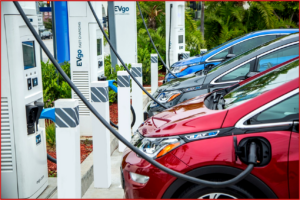
Taxpayers are subsidizing EV charging. Automakers and Regulators are moving ahead. Potential customers are still doubtful.
While the ongoing Covid plague has drastically changed American lives, what’s not new is that Inexperience and Lack of Knowledge Remain Barriers for Acceptance of EVs and Self-Driving Technologies. Nonetheless, automakers are investing heavily in electrification and self-driving technology despite an absence of substantive consumer interest in either, according to the J.D. Power 2020 Q3 Mobility Confidence Index Study.
The Mobility Confidence Index for battery-electric vehicles remains neutral, decreasing among American drivers to 54 from 55 (on a 100-point scale) while increasing among Canadian drivers to 58 from 57. For self-driving vehicles, the index is still low, slipping to 34 from 35 in the United States, while holding steady at 36 in Canada.
“Automakers took a step back once the COVID-19 pandemic hit, disrupting supply chains and slowing production,” said Kristin Kolodge, executive director of driver interaction & human machine interface research at J.D. Power. “With so many more people working from home or making shorter commutes, this is an opportunity to further tout the benefits of battery-electric vehicles and self-driving technologies. However, consumers remain skeptical because of their lack of first-hand experience with these technologies and lack of education about how and why these technologies work. Until auto manufacturers can rectify this, adoption will continue to be an uphill battle.”
Continue reading →










Covid – Drastic Changes to Commuting Have Slight Effect on Feelings about EVs and Self-Driving Technologies?
Taxpayers are subsidizing EV charging. Automakers and Regulators are moving ahead. Potential customers are still doubtful.
While the ongoing Covid plague has drastically changed American lives, what’s not new is that Inexperience and Lack of Knowledge Remain Barriers for Acceptance of EVs and Self-Driving Technologies. Nonetheless, automakers are investing heavily in electrification and self-driving technology despite an absence of substantive consumer interest in either, according to the J.D. Power 2020 Q3 Mobility Confidence Index Study.
The Mobility Confidence Index for battery-electric vehicles remains neutral, decreasing among American drivers to 54 from 55 (on a 100-point scale) while increasing among Canadian drivers to 58 from 57. For self-driving vehicles, the index is still low, slipping to 34 from 35 in the United States, while holding steady at 36 in Canada.
“Automakers took a step back once the COVID-19 pandemic hit, disrupting supply chains and slowing production,” said Kristin Kolodge, executive director of driver interaction & human machine interface research at J.D. Power. “With so many more people working from home or making shorter commutes, this is an opportunity to further tout the benefits of battery-electric vehicles and self-driving technologies. However, consumers remain skeptical because of their lack of first-hand experience with these technologies and lack of education about how and why these technologies work. Until auto manufacturers can rectify this, adoption will continue to be an uphill battle.”
Continue reading →